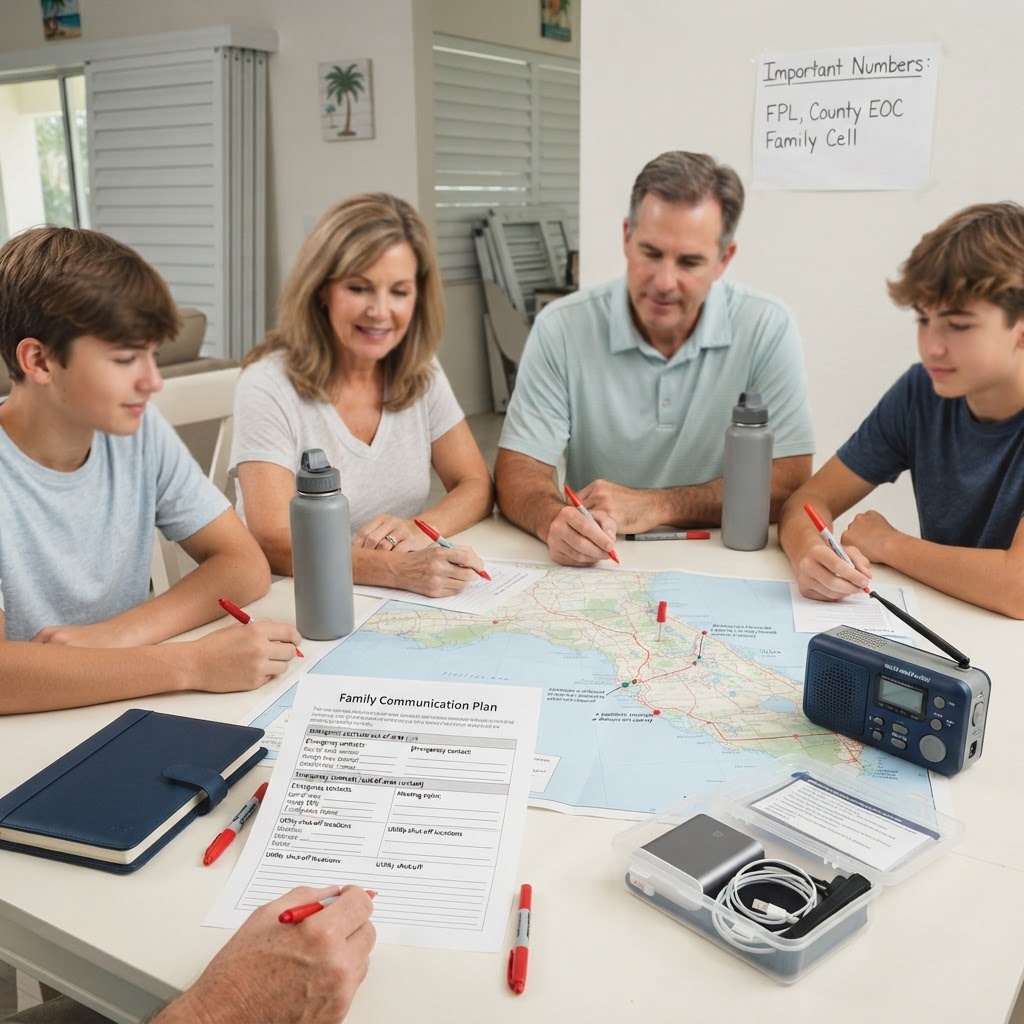
When disaster strikes in Florida, standard communication networks may become strained. Establish a reliable plan today to ensure your family stays connected.
In Florida, the importance of connectivity during an emergency cannot be overstated. Whether facing a severe thunderstorm, a hurricane, or a widespread utility disruption, the ability to coordinate with your household is a foundational pillar of public safety. When cellular towers are congested or power is out, relying on a pre-determined strategy ensures that every family member knows exactly how to act, where to go, and how to stay in touch. Developing this plan is a proactive step that moves your household from reactive worry to confident, organized action.
Designate an Out-of-Area Contact
In the immediate aftermath of a significant event, local phone lines often become overwhelmed by high call volume. It is frequently easier to place a long-distance call than a local one because these calls bypass the congested local switching stations. Identify a trusted friend or family member who lives in another state to serve as your central point of contact. Every member of your family should memorize this person's phone number or have it written on a waterproof card. When local communication is difficult, your family members should check in with this out-of-area contact to report their safety and location.
Establish Primary and Secondary Meeting Points
Not every emergency allows you to stay at home. If evacuation is necessary or if your residence is compromised, you need to know exactly where to regroup. Identify a primary meeting place right outside your home, such as a specific tree or mailbox, for immediate evacuations like a fire. Additionally, select a secondary meeting point outside of your immediate neighborhood in case the local area is inaccessible. Ensure every member of your family understands that if they cannot reach home or the primary meeting spot, they should head to the pre-arranged secondary location.
Utilize Multiple Communication Modalities
Relying solely on a smartphone is a significant risk during a disaster. Develop a redundant communication strategy that includes low-tech alternatives. Keep a physical list of emergency numbers in a central location, as phone batteries die and digital address books can become inaccessible. If you have children, teach them how to send a simple text message, which often requires less bandwidth than a voice call and can sometimes get through when cellular signal strength is poor. For longer-term outages, consider keeping a battery-operated or hand-crank NOAA weather radio to receive updates, as this ensures your household remains informed even when internet connectivity is lost.
Practice Your Plan Regularly
A communication plan is only effective if every member of the family is familiar with it. Once you have documented your points of contact and meeting locations, conduct a practice drill. This does not need to be stressful; it can be a simple household meeting where you walk through different scenarios, such as 'What happens if we are at school and work when a storm hits?' Regular review ensures that the plan becomes second nature, reducing panic and confusion when every second counts.
Practical Takeaways:
- Choose an out-of-area contact who can relay messages between separated family members.
- Write down important contact numbers on a laminated card for every family member.
- Identify two meeting spots: one near your home and one in a different part of your city or county.
- Teach family members how to send SMS text messages instead of placing voice calls during periods of network congestion.
- Periodically test your plan to ensure contact information is up to date and everyone knows the rendezvous locations.
Why This Matters to ERF: At Emergency Responders of Florida, our mission is to support the health and safety of our communities. We know that families who have a solid communication plan are significantly more resilient, which allows our first responders to focus their efforts where they are most needed. By taking personal responsibility for your household's preparedness, you assist us in maintaining orderly and efficient emergency operations across the state.
Stand Ready With ERF: Florida EMTs and Paramedics can submit a Disaster Reserve interest form to be considered for activation during major emergencies, with no regular hourly requirement.
ERF is not a 911 service. In an emergency, call 911.