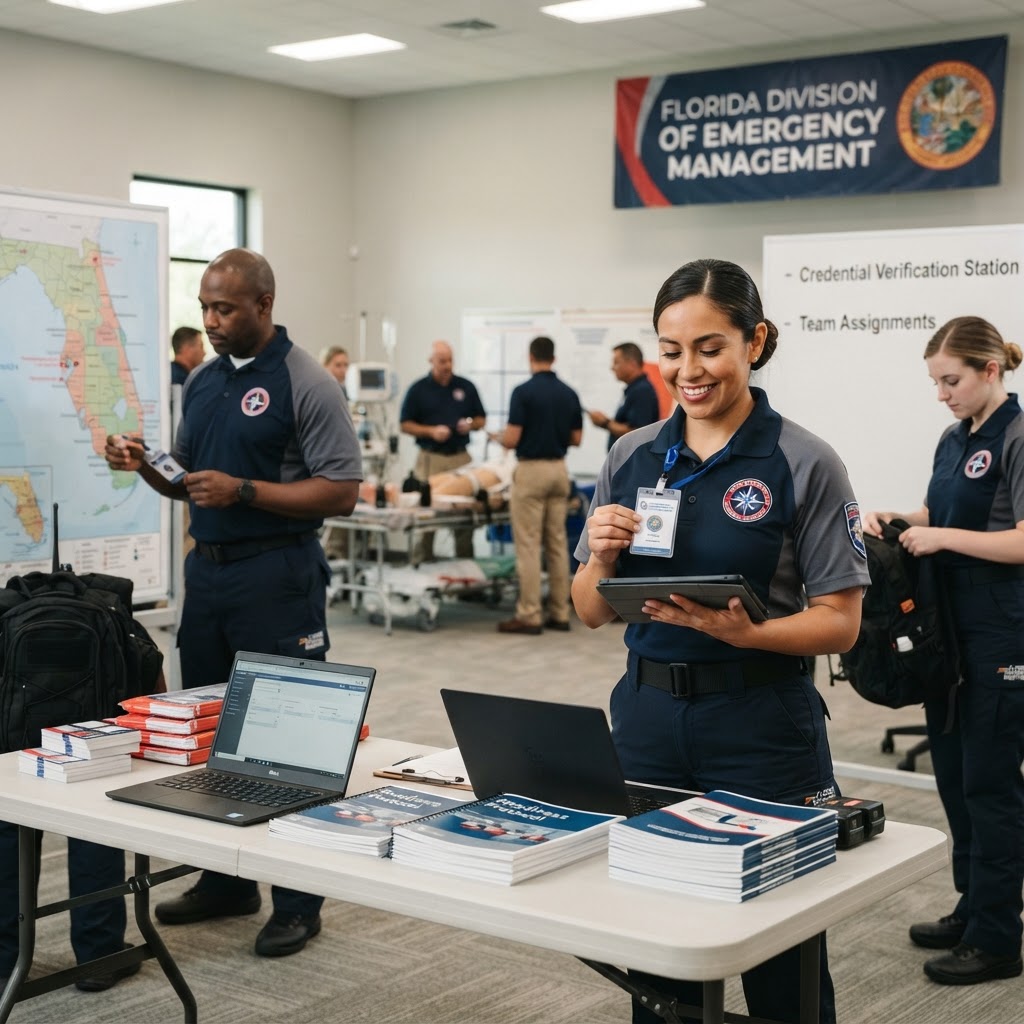
Maintaining current credentials is the cornerstone of effective disaster response, ensuring Florida responders are always ready when the call comes.
Professional emergency response requires more than just clinical skill; it requires a commitment to administrative and credentialing readiness. For EMTs, Paramedics, and other medical professionals in Florida, keeping documentation in order is a foundational aspect of disaster preparedness. When a major incident impacts our state, the ability to rapidly integrate into an organized response depends heavily on having current, verifiable credentials ready at a moment's notice.
The Importance of Proactive Credential Management
In the high-pressure environment of a disaster, the last thing any responder needs is a delay caused by expired certifications or missing documentation. Maintaining a digital and physical portfolio of your State of Florida certifications, NREMT status, and required training certificates is a professional imperative. Proactive management of these documents ensures that when you choose to volunteer during an activation, your focus remains entirely on patient care and team safety rather than bureaucratic hurdles.
Understanding Regulatory Requirements
Florida operates under a structured regulatory framework for EMS agencies. As responders, it is our responsibility to understand the requirements for both baseline EMS practice and the specific needs of disaster-tier deployments. This includes keeping track of your Florida Department of Health license renewal cycles, BLS/ALS card expiration dates, and any specialized training certificates. Familiarity with these requirements allows you to anticipate renewal timelines well before they become an issue.
Building Your Readiness Portfolio
We recommend that all responders maintain a dedicated "readiness folder." This should contain current copies of your state license, NREMT certificate, identification, and proof of basic NIMS training, such as IS-100 and IS-200. Having these items organized and readily accessible allows for a seamless onboarding process. Digital copies should be stored securely on an encrypted drive or in a protected cloud service, while hard copies should be kept with your personal go-bag, ensuring you have what you need regardless of power or internet availability.
Continuous Professional Development
Credential readiness is not a one-time task; it is an ongoing commitment to excellence. Beyond mandatory renewals, staying engaged with continuing education ensures your skills remain sharp. Florida offers numerous opportunities for professional growth through training programs and regional seminars. By regularly updating your skills and documenting these achievements, you remain a versatile and high-value member of any emergency response team.
Practical Takeaways
- Create a digital and hard-copy folder for your licenses, NREMT certification, and NIMS training records.
- Set calendar reminders at least 90 days before any certification expiration date.
- Regularly scan and update your credentials to a secure, accessible location.
- Review state-specific credentialing requirements for disaster deployments annually.
Why This Matters to ERF
At Emergency Responders of Florida, our mission is to provide professional and reliable support during times of crisis. We rely on the competence and readiness of our volunteers to maintain our status as a licensed agency. When our responders keep their credentials current, we are able to deploy effectively and provide the high standard of care that Floridians expect and deserve.
Stand Ready With ERF
Florida EMTs and Paramedics can submit a Disaster Reserve interest form to be considered for activation during major emergencies, with no regular hourly requirement.
ERF is not a 911 service. In an emergency, call 911.