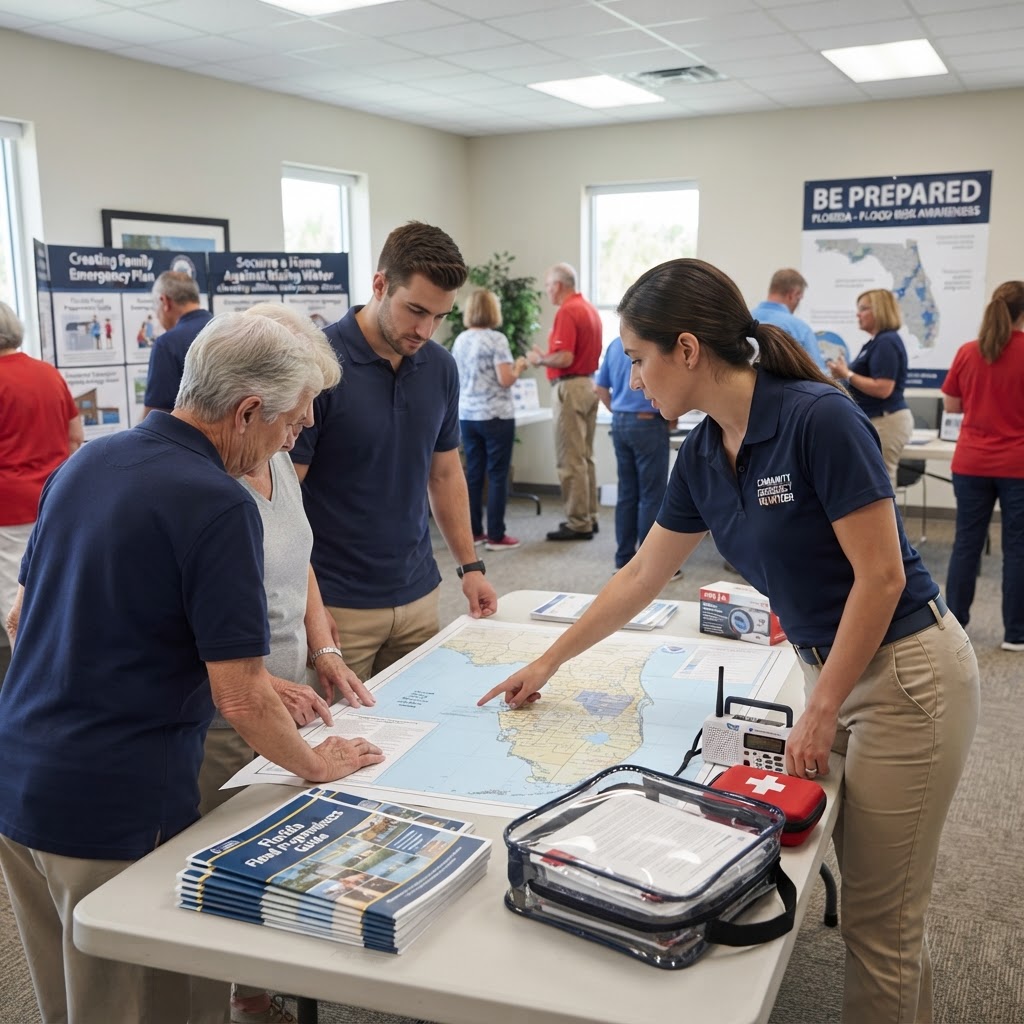
Flooding can happen rapidly in Florida. Learn how to identify your risk, secure your property, and build a proactive plan to stay safe when waters rise.
Living in Florida means appreciating our beautiful coastlines and waterways, but it also requires a deep respect for the potential impact of heavy rainfall and storm surges. Flooding is one of the most common and damaging hazards in our state, often occurring with little warning. Being prepared for flood events is not just about avoiding property damage; it is about ensuring the safety of your family and reducing the strain on emergency services when conditions worsen.
Know Your Flood Risk
The first step in effective disaster readiness is understanding your specific environment. Every neighborhood is different, and elevation levels can shift significantly within just a few miles. Visit the FEMA Flood Map Service Center to identify if your home is in a designated high-risk flood zone. Even if your property is not in a high-risk area, localized drainage issues can still cause significant issues during intense tropical storms or heavy summer thunderstorms. Knowing your risk helps you make informed decisions about property improvements, such as installing backflow valves or elevating critical utility equipment.
Developing a Household Evacuation Plan
When a flood warning is issued, hesitation is your greatest enemy. Every household should have a clear, pre-determined plan that includes multiple evacuation routes. Because many Florida roads are susceptible to flooding, rely on local government guidance regarding which routes are safe to use. Establish a meeting point outside of your immediate neighborhood in case you are separated when an event occurs. Ensure that every member of your family, including children, understands the plan so that if an emergency arises, everyone can move quickly and efficiently to higher ground.
Preparing Your Essential Supplies
When floodwaters threaten, time is limited. You should maintain a "Go Bag" that is easily accessible and contains essential items to sustain your family for at least 72 hours. This kit should include non-perishable food, bottled water, necessary medications, important documents stored in waterproof bags, flashlights with extra batteries, and a battery-powered radio for updates. By having these items pre-packed, you prevent the panic of searching for supplies when conditions are rapidly deteriorating.
Protecting Your Home and Assets
Beyond personal safety, taking steps to secure your property can mitigate long-term stress. Keep your gutters and storm drains clear of debris to ensure water can flow away from your home. If a flood event is imminent, move valuable personal belongings, electronics, and documents to higher levels of your home. If you have time and it is safe to do so, document the condition of your property with photos or videos. Remember, never attempt to walk or drive through moving water, as even a few inches can be deceptive and powerful enough to sweep a person or vehicle away.
Practical Takeaways
-
Check your property's flood risk level on official FEMA or county websites.
-
Create a family communication plan and designate an out-of-town contact person.
-
Assemble a portable "Go Bag" with 72 hours of supplies for every household member.
-
Keep local drainage paths clear of debris to help water move away from your foundation.
-
Never ignore an evacuation order; leave early when advised to do so by local officials.
Why This Matters to ERF
At Emergency Responders of Florida, we see firsthand the impact that well-prepared residents have on the overall effectiveness of disaster response. When individuals are ready, our communities possess a higher level of resilience. This allows responders to prioritize reaching those in the most critical need. Proactive readiness is the cornerstone of community safety, and we encourage every Florida resident to take these small but impactful steps to safeguard their homes and families.
Stand Ready With ERF
Florida EMTs and Paramedics can submit a Disaster Reserve interest form to be considered for activation during major emergencies, with no regular hourly requirement.
ERF is not a 911 service. In an emergency, call 911.