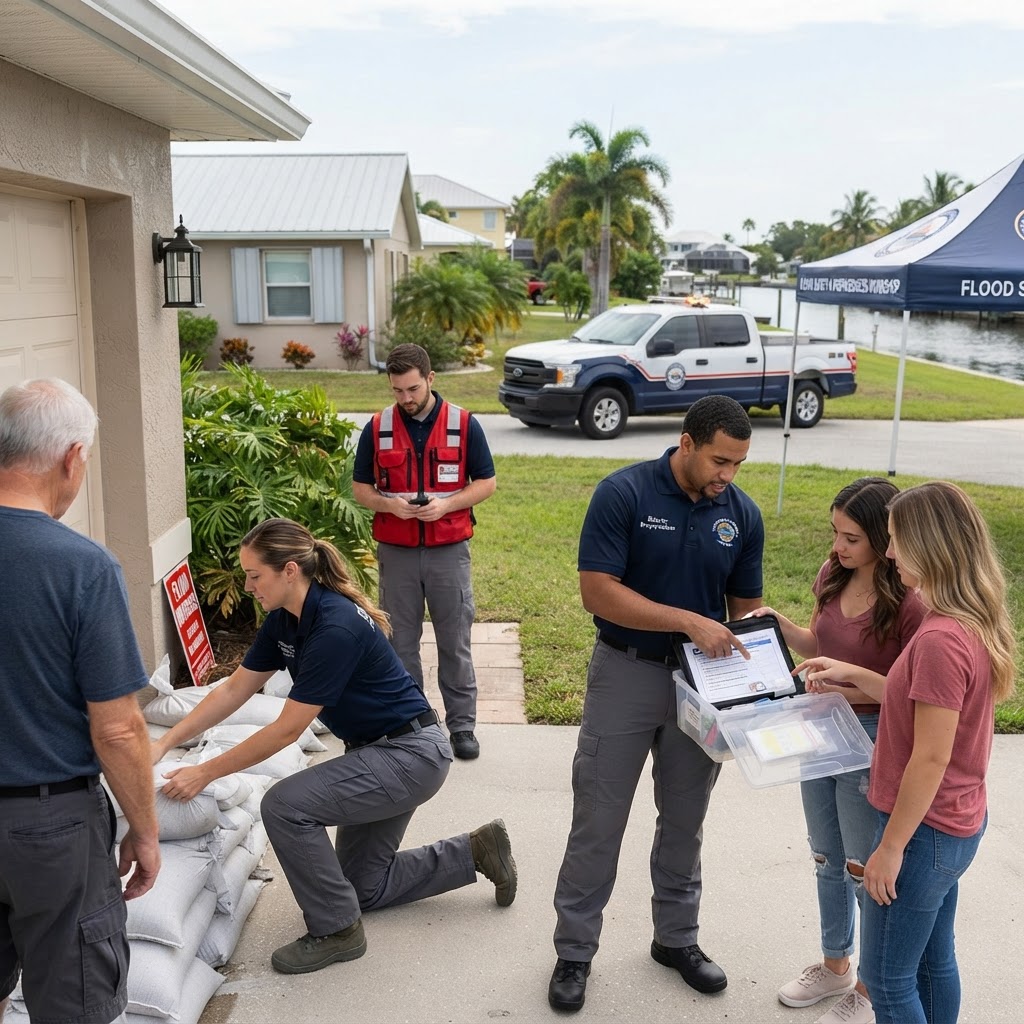
Florida's unique geography makes flood preparedness a vital skill for every resident. Learn how to secure your property and develop a personal safety plan.
Living in Florida means embracing a landscape defined by its beautiful waterways and coastline. However, our low-lying terrain also makes flooding a significant reality for many homeowners, whether from heavy seasonal rainfall, tropical storms, or storm surge. At Emergency Responders of Florida (ERF), we believe that the most effective emergency response begins with the steps you take in your own home long before a crisis occurs.
Understand Your Local Flood Risk
Knowledge is your first line of defense against flooding. The initial step is to determine where your property stands in relation to flood zones. You can consult the FEMA Flood Map Service Center to identify if your home is in a high-risk area. Beyond maps, talk to neighbors who have lived in your area for years; their anecdotal experience regarding historical water levels can be just as valuable as technical data. Understanding your vulnerability helps you prioritize which mitigation efforts to undertake first.
Hardening Your Home Against Water
Small home improvements can significantly reduce the impact of rising water. Ensure your gutters and downspouts are clear of debris so that water is directed away from your home's foundation. If you are in a flood-prone area, consider installing backflow valves on your sewer lines to prevent sewage backup during heavy flooding. For those with accessible crawl spaces or basement areas, sealing cracks and ensuring proper elevation of electrical components can prevent costly damage and dangerous electrical hazards during a weather event.
Creating a Targeted Emergency Kit
When floodwaters rise, access to essential supplies may be cut off quickly. Your emergency kit should be stored in watertight containers and placed on the highest level of your home. Beyond standard non-perishable food and water, include essential documents such as insurance policies, medical records, and identification inside a sealed plastic bag. Remember to include personal hygiene items, batteries, a manual can opener, and a portable radio. If your family relies on specific medications, keep an extra supply in your kit, ensuring they are protected from moisture.
The Importance of a Defined Evacuation Route
Do not wait until a flood warning is issued to decide how you will leave your area. Map out multiple routes from your neighborhood to higher ground or a designated shelter. Familiarize yourself with the evacuation orders provided by your county emergency management office. Practice your route during clear weather to understand the timing and potential bottlenecks. If you have pets, ensure you have a plan for their transport and a list of pet-friendly evacuation locations, as many general public shelters have specific rules regarding animals.
Practical Takeaways
- Check your property's flood risk on the FEMA website and review your homeowner's insurance policy to understand flood coverage.
- Clear gutters and downspouts regularly to maintain proper drainage away from your home's foundation.
- Store essential documents, medications, and a three-day supply of food and water in a waterproof container on the highest floor of your home.
- Pre-plan your evacuation routes and ensure every family member knows where to meet if you are separated.
Why This Matters to ERF
As a licensed ALS EMS agency, ERF sees firsthand the aftermath of severe flooding. When residents are prepared and have taken proactive steps to secure their homes and establish safety plans, it allows our teams to focus resources on those who are truly in need of rescue or urgent medical assistance. Your preparedness directly supports the resilience of our entire Florida community during the most challenging times.
Stand Ready With ERF
Florida EMTs and Paramedics can submit a Disaster Reserve interest form to be considered for activation during major emergencies, with no regular hourly requirement.
ERF is not a 911 service. In an emergency, call 911.