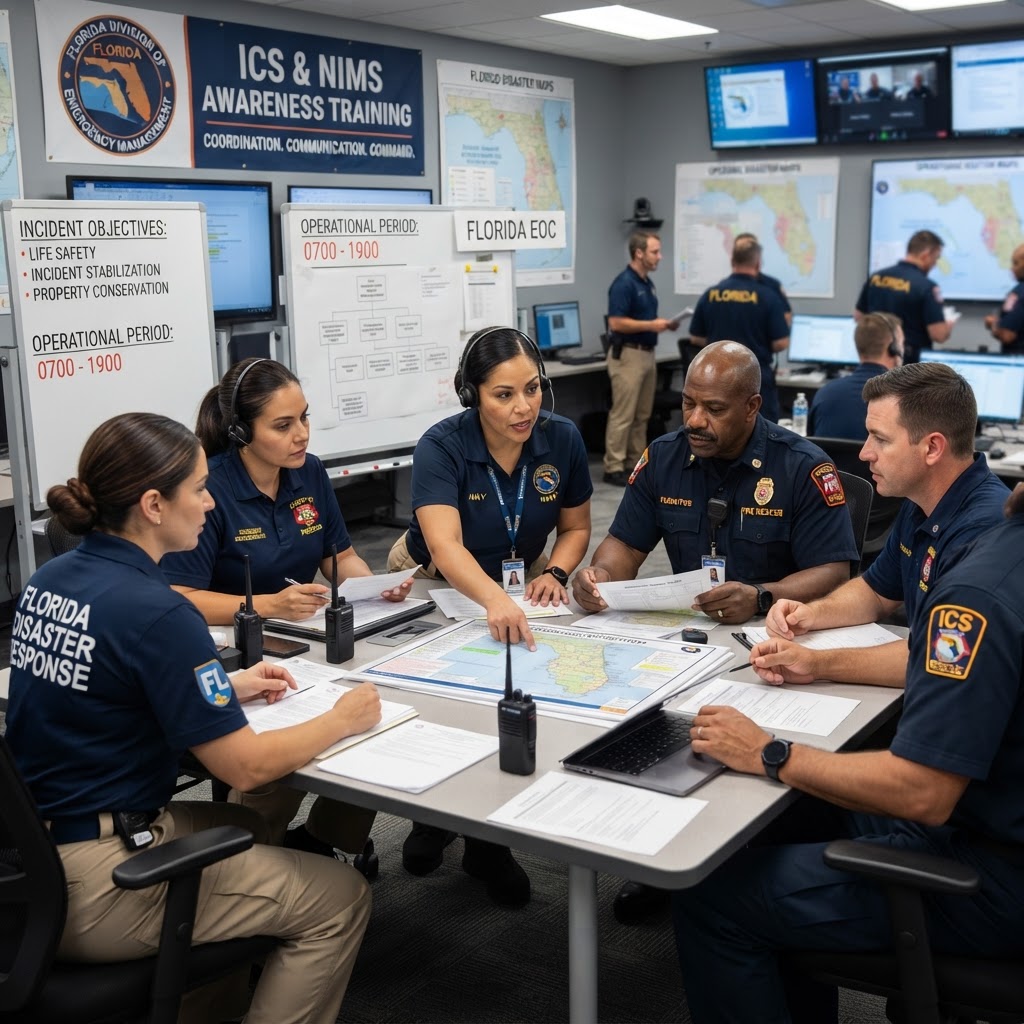
Mastering the Incident Command System is essential for every Florida responder. Learn how standardized protocols ensure safety and coordination.
Understanding Unified Command
In the high-stakes environment of emergency management across Florida, coordination is the difference between chaos and order. The Incident Command System (ICS) and the National Incident Management System (NIMS) are not just administrative requirements; they are the fundamental language of disaster response. Whether you are an EMT working a large-scale event or a Paramedic integrating into a state-led task force, understanding how these systems function ensures that resources are allocated efficiently and every responder is accounted for.
The Role of Standardized Communication
One of the primary benefits of NIMS is the establishment of common terminology. When agencies from across the state converge on a disaster site, using non-standardized jargon can lead to critical miscommunications. By adhering to ICS structures, Florida emergency response volunteers can seamlessly plug into a larger command structure. This proficiency allows for rapid scalability, ensuring that as a situation evolves, the response remains cohesive and safe for both the public and the personnel on the ground.
Streamlining Agency Integration
Florida’s unique geography and the frequency of natural disasters necessitate an 'all-hazards' approach to readiness. When local EMS providers, volunteer agencies, and state authorities work under a unified ICS framework, they minimize redundancy and maximize operational impact. For the individual responder, internalizing these management principles means you are prepared to accept assignments within an Incident Action Plan, understand your role in the chain of command, and contribute to a successful outcome without confusion or delay.
Practical Takeaways
- Complete baseline NIMS courses (IS-100 and IS-200) to understand your place in the organizational hierarchy.
- Practice using clear, plain language in all radio and verbal communications to ensure interoperability.
- Familiarize yourself with the concept of Span of Control to understand effective team supervision.
- Keep your certification records updated so that command staff can rapidly verify your qualifications during deployment.
Why This Matters to ERF
As a Licensed ALS EMS Agency, ERF relies on the high standards set by NIMS to integrate our volunteer professionals into complex, multi-agency environments. By maintaining proficiency in these systems, our members ensure that when the call comes, we are ready to serve Florida communities with the professionalism and coordination expected of high-tier emergency assets.
Stand Ready With ERF
Florida EMTs and Paramedics can submit a Disaster Reserve interest form to be considered for activation during major emergencies, with no regular hourly requirement.
ERF is not a 911 service. In an emergency, call 911.