Mastering the basics of the Incident Command System and NIMS is vital for every Florida responder. Learn how these frameworks ensure effective coordination.
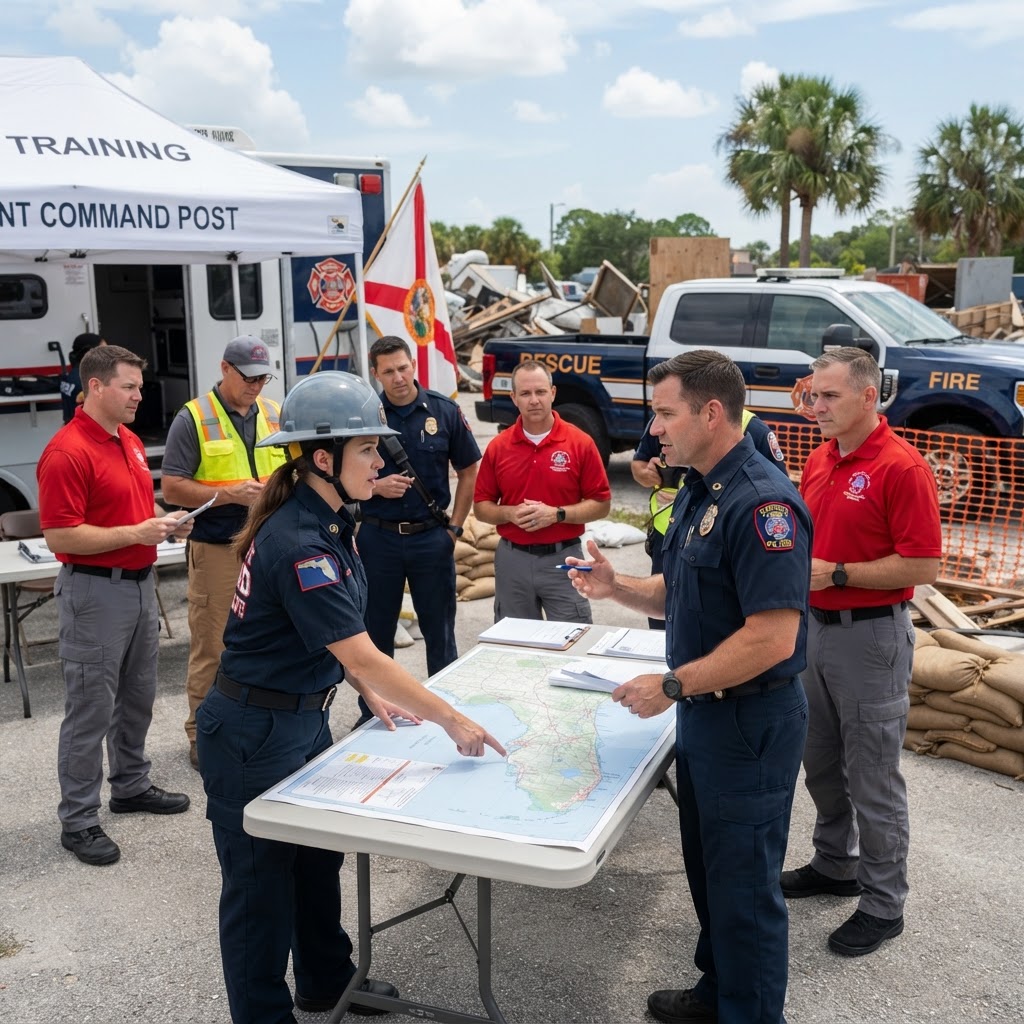
For emergency responders in Florida, the ability to integrate seamlessly into a large-scale incident is as critical as the clinical skills used to treat patients. When disasters strike, whether they are hurricanes, flooding, or mass casualty incidents, the success of the operation relies on a common language and structure. This is where the Incident Command System (ICS) and the National Incident Management System (NIMS) play a pivotal role.
Understanding the NIMS Framework
NIMS provides a systematic, proactive approach to guide departments and agencies at all levels of government, nongovernmental organizations, and the private sector to work together seamlessly. It is not an operational manual for specific emergencies; rather, it is a comprehensive framework that outlines the terminology, organizational structure, and management processes necessary to handle any incident regardless of size, scope, or complexity. For a Florida volunteer responder, understanding NIMS means understanding your place within the larger state and federal emergency response hierarchy.
The Logic of the Incident Command System
ICS is the organizational engine within NIMS. It provides a standardized, on-scene, all-hazard incident management concept. ICS is designed to allow agencies to work together efficiently by establishing a common management structure. One of the core tenets of ICS is 'span of control,' which ensures that no single supervisor is overwhelmed by managing too many people or tasks. By adopting a unified command structure, responders from different agencies—such as local fire, municipal EMS, and state-level volunteers like those at ERF—can coordinate their efforts without confusion or duplication of labor.
Why Standardized Terminology Matters
One of the most frequent points of failure in disaster response is communication. If two agencies use different terms for the same equipment, tactics, or organizational roles, the result is delay and potential danger. ICS mandates the use of common terminology. This ensures that when a responder requests a resource or provides a status update, every other person in the command chain understands exactly what is being requested or reported. This discipline is essential for the fast-paced, high-stress environment typical of a Florida disaster deployment.
Scalability and Flexibility
Disasters in Florida often start small and expand rapidly. The beauty of the ICS model is its scalability. Whether you are managing a localized incident with a handful of responders or a state-wide emergency involving thousands of personnel, the structural principles remain the same. This allows volunteers to jump into a command structure and know exactly who they report to, what their objectives are, and how their specific assignment supports the overall mission. Being familiar with these scalable structures allows you to remain calm and effective even when the situation is dynamic.
Practical Takeaways
- Complete the FEMA IS-100 and IS-700 courses to build your foundational knowledge.
- Always identify your immediate supervisor at the start of any deployment or training event.
- Practice using plain language in your communications; avoid agency-specific jargon that others might not understand.
- Maintain an updated copy of your incident certifications in your gear bag so you are ready to check in upon arrival.
Why This Matters to ERF
ERF operates as part of a larger ecosystem of healthcare and emergency services in Florida. To provide high-quality support during major incidents, our members must be able to 'plug and play' into existing command structures. When our volunteers understand ICS and NIMS, they become force multipliers. They reduce the burden on incident command and ensure that our agency's contributions to the mission are precise, safe, and professional.
Stand Ready With ERF
Florida EMTs and Paramedics can submit a Disaster Reserve interest form to be considered for activation during major emergencies, with no regular hourly requirement.
ERF is not a 911 service. In an emergency, call 911.