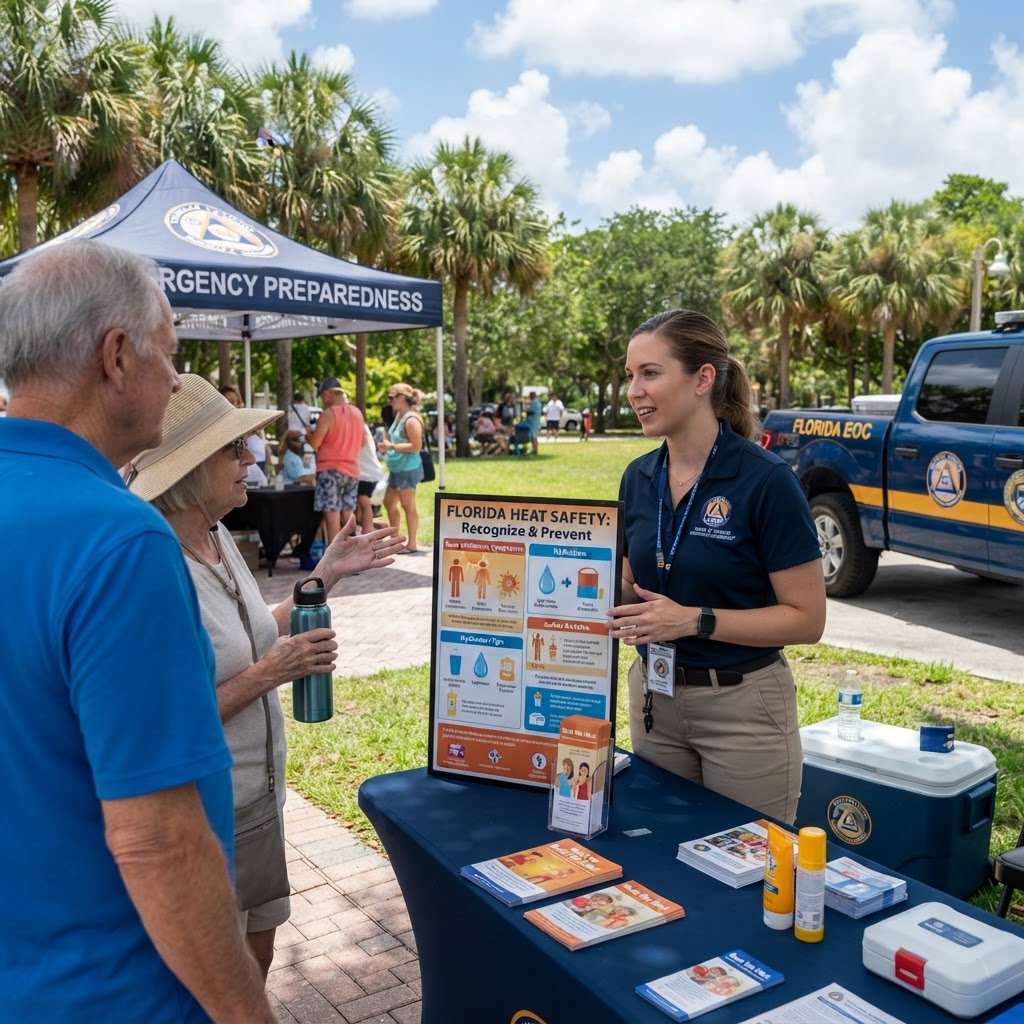
High temperatures are a constant in Florida. Learn how to stay safe, recognize heat-related illness, and protect your family from the summer sun.
Living in Florida offers a beautiful climate, but our iconic sunshine brings a significant challenge: extreme heat. As temperatures rise throughout the summer, the risk of heat-related illnesses increases for everyone, from outdoor workers to families enjoying a day at the beach. At Emergency Responders of Florida (ERF), we believe that the most effective emergency response is the one that prevents a crisis before it starts. By understanding the environment and preparing accordingly, you can enjoy the Florida summer while keeping yourself and your loved ones safe.
Understanding Heat-Related Illnesses
The human body works hard to regulate its internal temperature, but high humidity and extreme heat can overwhelm these natural systems. It is vital to recognize the early warning signs of heat stress. Heat exhaustion can manifest as heavy sweating, rapid pulse, dizziness, or nausea. If left unaddressed, this can escalate into heat stroke, a life-threatening medical emergency characterized by a high body temperature, confusion, or a loss of consciousness. Being able to spot these indicators in yourself, your family, or your neighbors is a foundational skill in community emergency preparedness.
Proactive Hydration and Timing
The simplest defense against the heat is effective hydration. Do not wait until you feel thirsty to drink water; by the time thirst sets in, your body is already beginning to experience dehydration. If you have outdoor tasks or recreational activities planned, schedule them for the early morning or late evening when the sun's intensity is at its lowest. During the peak hours of midday, prioritize shade and indoor environments. Wearing light-colored, loose-fitting clothing also allows your body to regulate its temperature more effectively in the humid Florida air.
Creating Cool Zones at Home
Not every home remains perfectly cool during a prolonged heatwave. Identify a 'cool room' in your house where you can retreat if temperatures spike or if your primary cooling system faces maintenance issues. This space should ideally be on the lowest level of the home and away from direct sunlight. Having portable fans, blackout curtains, and a steady supply of electrolyte-rich drinks or water stored in this area can provide a necessary buffer during extreme weather events. Ensure that your home maintenance includes checking your HVAC filters regularly to ensure your air conditioning unit is operating at peak efficiency throughout the season.
Monitoring Vulnerable Populations
Florida's heat does not affect everyone equally. Older adults, children, and individuals with chronic health conditions are at a higher risk of suffering from heat stress. As part of your neighborhood readiness strategy, check in on neighbors or family members who may be more susceptible to high temperatures. A simple phone call or a doorstep check during a heat advisory can make a life-changing difference. Building these connections within your community strengthens our collective ability to weather the seasonal challenges that come with living in our state.
Practical Takeaways
-
Prioritize hydration by drinking water consistently throughout the day, even if you do not feel thirsty.
-
Plan strenuous outdoor activities for the early morning or late evening to avoid peak heat index hours.
-
Wear breathable, lightweight clothing and use sun protection like hats and high-SPF sunscreen.
-
Monitor the local weather reports for heat advisories and share information with elderly neighbors.
-
Recognize symptoms of heat exhaustion: heavy sweating, weakness, dizziness, or a rapid heart rate.
Why This Matters to ERF
As a licensed ALS EMS agency, ERF frequently encounters the consequences of preventable heat-related emergencies. When residents take proactive steps to manage heat safety, they reduce the strain on the regional emergency medical infrastructure. Our mission is to support the health and safety of Florida communities, and your personal preparedness is a critical component of that collective resilience. By staying ready, you empower us to focus our resources on the most complex emergencies.
Stand Ready With ERF
Florida EMTs and Paramedics can submit a Disaster Reserve interest form to be considered for activation during major emergencies, with no regular hourly requirement.
ERF is not a 911 service. In an emergency, call 911.