Discover how the Incident Command System and NIMS provide a unified framework for effective emergency coordination across Florida.
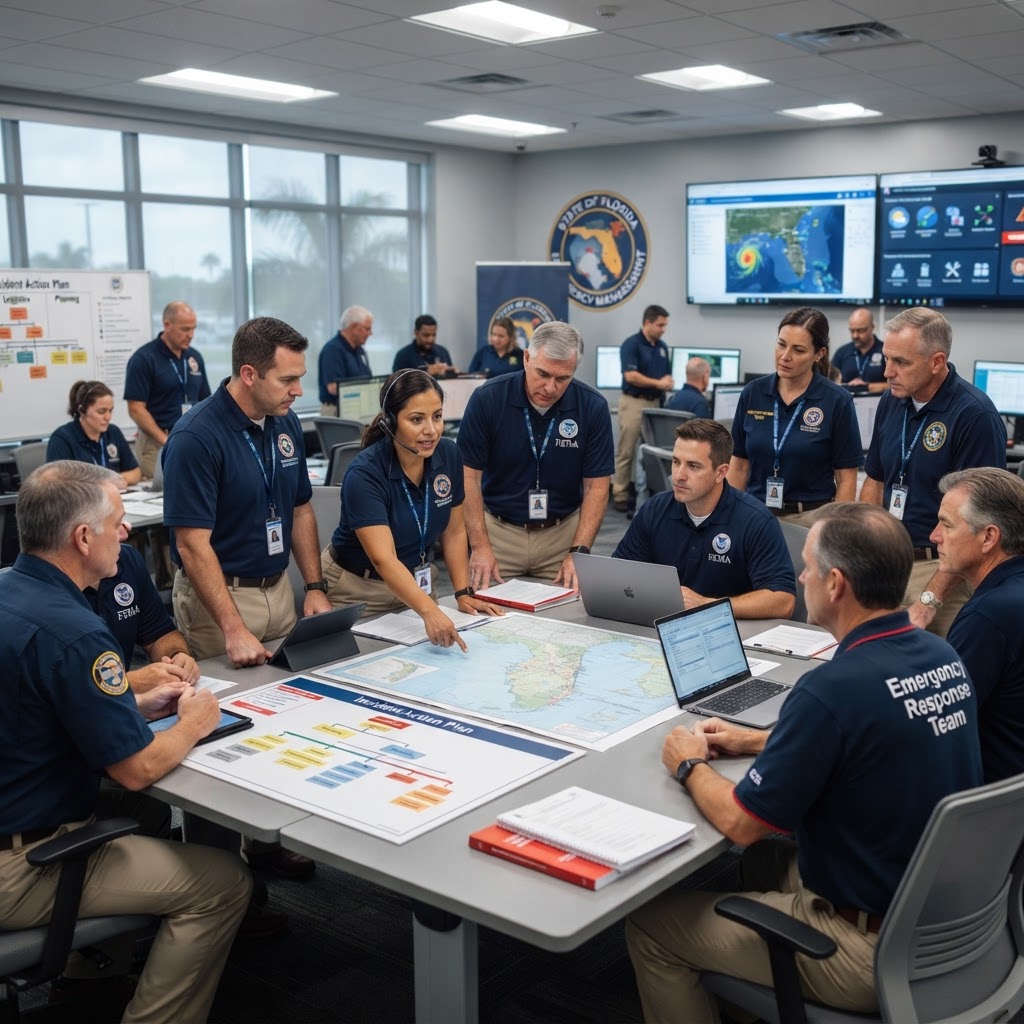
When a large-scale disaster impacts the Florida peninsula, the scene is often complex, involving multiple agencies, jurisdictions, and specialized teams. In these moments, success depends on seamless coordination and a shared language. This is where the National Incident Management System (NIMS) and the Incident Command System (ICS) become essential tools for every EMT, paramedic, and volunteer responder.
The Foundation of Unified Command
At its core, ICS is a standardized, on-scene, all-hazard incident management concept. It provides a common organizational structure that allows agencies to work together effectively, regardless of their size or origin. Whether it is a local flooding event or a statewide disaster response, using a common terminology ensures that an EMT from Miami and a paramedic from the Panhandle are on the same page from the moment they arrive at the staging area.
Establishing Clear Lines of Authority
One of the most critical aspects of ICS is the span of control and the chain of command. In the chaotic environment of a disaster, knowing exactly who you report to and who is responsible for specific operational objectives prevents duplication of effort and confusion. By adhering to the principles of unity of command, responders can maintain safety and efficiency, ensuring that leadership can make informed, rapid decisions based on real-time field information.
Enhancing Scalability and Flexibility
Disasters rarely stay small for long. ICS is designed to be scalable, meaning it can expand or contract based on the needs of the incident. A small-scale operation might involve a single supervisor, while a major deployment could grow into a full-scale organization with sections dedicated to operations, logistics, planning, and finance. Understanding how these roles interact helps responders integrate into an existing command structure immediately upon arrival, minimizing downtime and maximizing impact.
Practical Takeaways
- Complete baseline NIMS courses like IS-100 and IS-200 to understand the fundamental roles and responsibilities within an ICS structure.
- Always identify your supervisor and the incident objectives immediately upon reporting to a deployment site.
- Use plain language in all radio and verbal communications to ensure clarity across different agencies and disciplines.
- Keep your training records current and accessible, as agencies often verify NIMS certifications before integrating personnel into an active incident.
Why This Matters to ERF
As a Florida Department of Health Licensed ALS EMS Agency, ERF relies on the rigorous application of NIMS and ICS to ensure our volunteers can integrate effectively with local, state, and federal partners. Our mission is to support the existing emergency infrastructure; by mastering these systems, our members ensure they are professional, predictable, and highly effective assets during state-led disaster activations.
Stand Ready With ERF
Florida EMTs and Paramedics can submit a Disaster Reserve interest form to be considered for activation during major emergencies, with no regular hourly requirement.
ERF is not a 911 service. In an emergency, call 911.