Effective communication under pressure is a force multiplier for emergency teams. Learn how clear radio discipline ensures safety and efficiency on the ground.
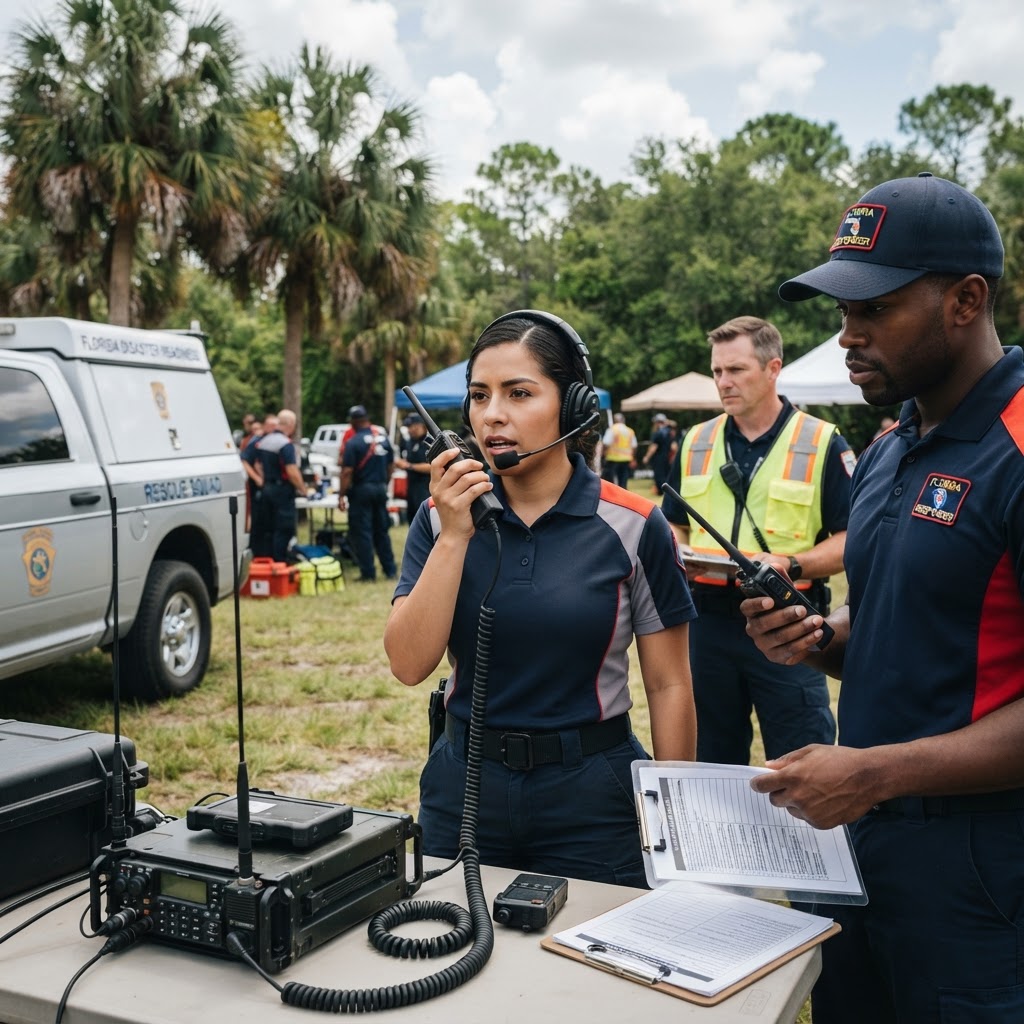
In the unpredictable environment of a disaster scene, clear communication is the lifeline of every emergency response. Whether you are navigating a post-hurricane search area or supporting an ALS transport in a crowded incident command post, the ability to communicate succinctly over a radio is a critical skill for any EMT or paramedic. Radio discipline is not just about technical proficiency; it is about ensuring that vital information reaches the right person without cluttering the airwaves during a crisis. As Florida responders, we operate in high-stress, high-noise environments where efficiency can literally be the difference between a successful operation and a compromised team.
The Fundamentals of Clear Transmission
Proper radio discipline begins before you press the push-to-talk button. Thinking before you speak is the single most effective way to improve communication clarity. In the heat of an emergency, our instinct is often to rush, but rapid-fire speech leads to garbled information and increased demand for repeat transmissions. By taking a brief second to organize your thoughts—identifying who you are calling, who you are, and what your message is—you eliminate unnecessary airtime and ensure that your point is understood on the first attempt.
Establishing Protocol and Etiquette
Standardizing how we talk on the radio minimizes confusion during multi-agency operations. Using plain language rather than obscure codes ensures that responders from various jurisdictions, including law enforcement, fire, and private EMS, can understand one another instantly. Furthermore, professional etiquette involves keeping transmissions brief and professional. Avoid conversational "fillers" or "thank-yous" that occupy the channel. Remember that during a major incident, the airwaves are a shared resource; keeping your message focused allows for the uninterrupted flow of critical updates from command staff and field teams alike.
Managing High-Noise Environments
Florida’s climate often presents environmental challenges—from high winds during severe weather events to the constant drone of heavy machinery or generators. Mastering radio discipline means learning to position your microphone properly to filter out background noise. Shield the microphone with your hand if necessary, and use a consistent volume. If you find yourself in an area with excessive noise, move to a quieter location or shelter before transmitting, if conditions allow. If you must transmit in a loud area, speak across the microphone rather than directly into it to prevent "clipping" or distortion that renders your message unintelligible.
The Importance of Read-Backs
In critical operations, the "read-back" is your final layer of safety. When receiving instructions—especially those regarding patient locations, medication orders, or movement vectors—always confirm the message by repeating the core details back to the dispatcher or command officer. This confirms that the message was not only heard but also correctly understood. This simple feedback loop prevents dangerous errors and ensures that the entire team remains synchronized, even when the operational tempo is high.
Practical Takeaways:
- Think before you speak: Identify the recipient, yourself, and your core message before keying the mic.
- Use plain language: Replace complex radio codes with clear, professional speech to ensure interoperability.
- Practice brevity: Keep messages short to leave the channel open for other urgent traffic.
- Always read back: Confirm critical instructions by repeating the key information to ensure absolute clarity.
Why This Matters to ERF
At Emergency Responders of Florida, we are committed to maintaining a high level of operational readiness. Because our members often deploy into complex, multi-agency environments, the ability to communicate effectively on the radio is an essential component of our team accountability and safety. By mastering these communication skills, our volunteers ensure that ERF remains a reliable, professional partner to the state and our local communities when they need us most.
Stand Ready With ERF
Florida EMTs and Paramedics can submit a Disaster Reserve interest form to be considered for activation during major emergencies, with no regular hourly requirement.
ERF is not a 911 service. In an emergency, call 911.