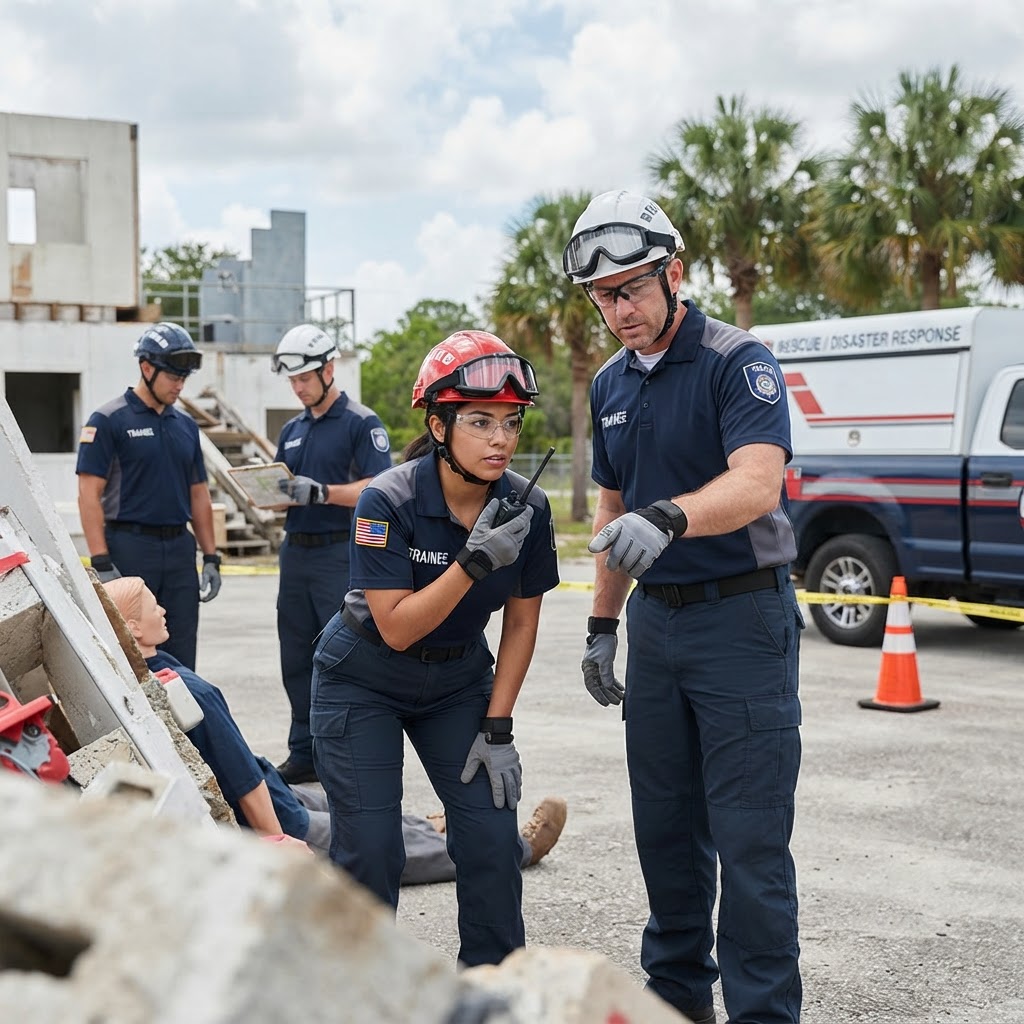
Scene safety is the cornerstone of effective disaster response. Learn why prioritizing your own well-being is the only way to effectively serve others.
In the fast-paced environment of Florida emergency response, the urge to act is a powerful and necessary instinct. However, every professional responder knows that the most effective interventions begin long before a patient is contacted. Scene safety is not merely a box to check on a pre-hospital care report; it is the fundamental framework that ensures a mission's success and the personal survival of the responder team.
The Evolution of the Safety Mindset
Many new responders mistakenly equate safety awareness with passivity. In reality, maintaining scene safety requires constant, high-level vigilance. Whether arriving at a motor vehicle accident on a rain-slicked Florida highway or navigating a complex environment following a severe storm, the landscape is never static. Your assessment begins the moment you approach the scene, looking for hazards like downed power lines, unstable structures, or traffic hazards that may not be immediately obvious.
Dynamic Risk Assessment in Florida Environments
Florida presents unique challenges to scene safety that demand constant adaptation. Our environment changes rapidly, from flash flooding in urban areas to the high-heat conditions that can quickly degrade a responder’s physical and mental capacity. When operating in these environments, your assessment must be iterative. A location that appears safe at the time of arrival can quickly become hazardous as the situation develops. By maintaining a situational awareness loop, you ensure that you are not just reacting to a scene, but proactively managing the environment to minimize risk to yourself and your team.
The Psychology of Self-Preservation
Effective volunteerism relies on the health and availability of the volunteers. If an emergency responder becomes a patient, the very resources that were intended to mitigate a crisis are suddenly diverted to manage an preventable incident. This is why scene safety is inextricably linked to our operational readiness. Developing a disciplined approach to scene management—knowing when to hold back, when to request additional assets, and how to define your workspace—is the hallmark of a seasoned professional. It is this disciplined restraint that allows for sustained, high-quality care throughout the duration of a multi-day deployment.
Practical Takeaways
- Always scan for environmental hazards, such as compromised utilities or debris, before exiting the vehicle.
- Establish clear ingress and egress routes to ensure your team is never trapped by rising water or traffic obstructions.
- Utilize proper personal protective equipment (PPE) for every call, regardless of how minor the incident may appear.
- Maintain constant communication with your team leads regarding identified hazards to ensure everyone on the scene shares the same safety picture.
Why This Matters to ERF
As a licensed ALS EMS agency, Emergency Responders of Florida (ERF) operates under the principle that our greatest asset is our people. Our commitment to the community depends entirely on our ability to respond safely and effectively when disaster strikes. By mastering scene safety fundamentals, our members ensure they remain capable, reliable, and ready to contribute to the mission without adding to the burden of the disaster zone. We prioritize safety because we value the health of our responders as much as we value the lives of those we serve.
Stand Ready With ERF
Florida EMTs and Paramedics can submit a Disaster Reserve interest form to be considered for activation during major emergencies, with no regular hourly requirement.
ERF is not a 911 service. In an emergency, call 911.