A well-organized personal go-bag is the foundation of responder readiness. Discover how Florida EMTs and Paramedics can stay mission-ready for any deployment.
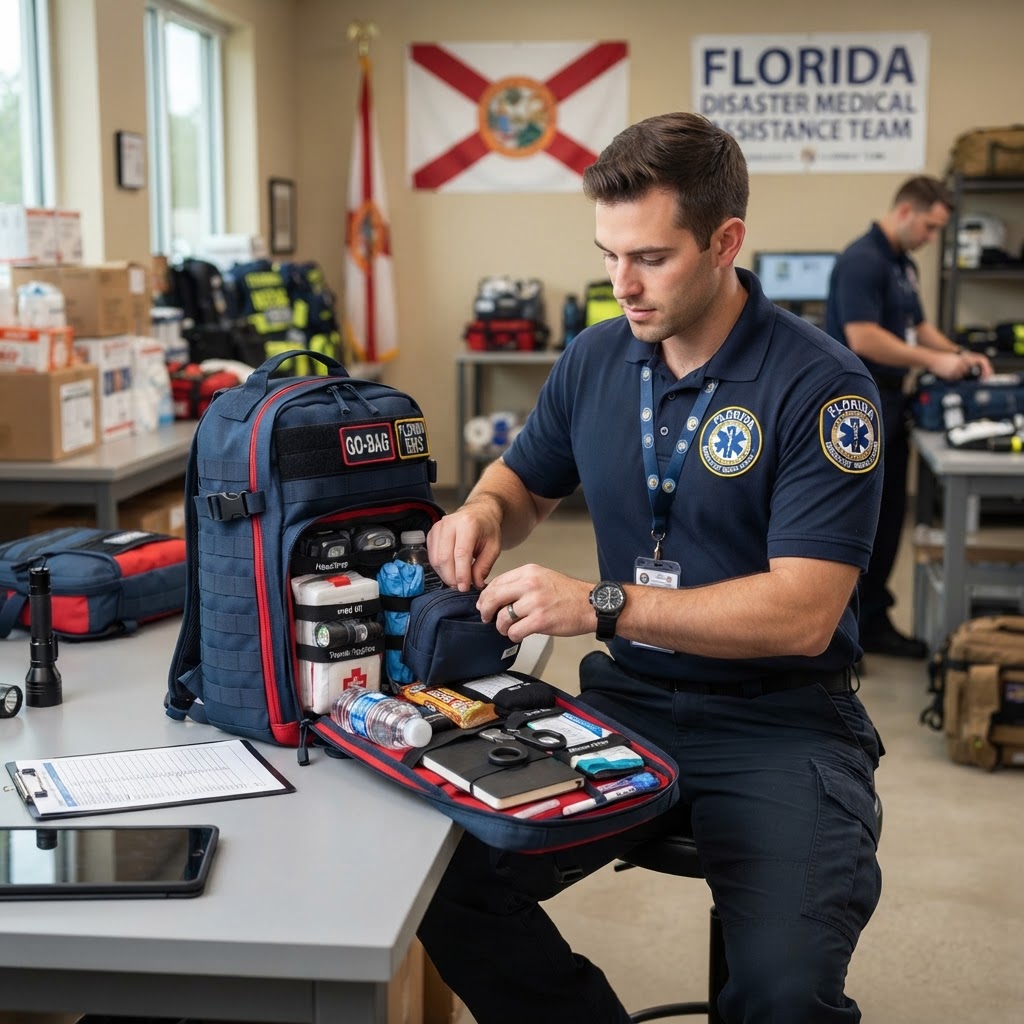
For the volunteer emergency responder, readiness is not just a mindset—it is a tangible asset stored inside a pack. When the call comes to support disaster operations across Florida, the difference between an effective, self-sufficient responder and one struggling to maintain stability often comes down to their personal go-bag. Whether you are an EMT, a Paramedic, or a dedicated Disaster Reserve volunteer, having a pre-staged, comprehensive kit ensures you can focus entirely on the mission at hand rather than your own immediate needs. Building a reliable go-bag is a cornerstone of professional emergency preparedness in our state, where the unpredictability of storm systems and infrastructure challenges demand total self-reliance during the initial stages of a mobilization.
The Philosophy of Self-Sufficiency
In the context of disaster response, 'self-sufficiency' means the ability to operate for 72 hours without external support or logistics. This allows teams to integrate into staging areas without becoming a drain on limited resources. Your go-bag should act as your mobile base of operations. It must be organized, durable, and specifically tailored to the environmental realities of Florida, such as humidity, extreme heat, and the potential for rapid weather shifts. By treating your gear with the same level of maintenance as the equipment on an ALS ambulance, you demonstrate the professionalism expected of every ERF responder.
Essential Gear for Florida Environments
Florida deployment environments are notoriously demanding. Your gear should prioritize moisture-wicking apparel, high-quality footwear suitable for uneven terrain or standing for long durations, and robust rain protection. Beyond clothing, consider the 'power grid' of your kit. Bring redundant charging solutions, such as portable power banks and cable sets, to ensure your communication devices remain operational. Furthermore, prioritize personal hygiene items like quick-dry towels and anti-fungal powders; maintaining personal health in hot, damp conditions is essential to preventing minor issues from becoming mission-limiting injuries.
Nutrition and Hydration Strategies
Never rely on the availability of local food or potable water sources when deploying. A responder's pack must contain high-calorie, non-perishable food items that require no cooking and provide sustained energy. When selecting your food, aim for items that are lightweight but nutrient-dense. Similarly, hydration is critical. While large quantities of water are heavy, carrying a filtration system or tablets—in addition to your initial ration—provides a critical safety net if you encounter contaminated water sources or supply chain delays during your deployment.
Organization and Maintenance Cycles
Even the best gear is useless if you cannot find it in the dark or under stress. Use modular packing cubes to compartmentalize your clothes, toiletries, and tools. Regularly rotate your kit to check for expired food, damaged straps, or batteries that have leaked. We recommend a seasonal 'refit' at the start of Florida's peak weather months to ensure your gear reflects the current climate needs. Keeping a digital inventory checklist on your phone can also help you quickly verify that all mission-critical items are packed before you depart for a mobilization.
Practical Takeaways
- Use color-coded modular packing cubes to keep your gear organized for rapid access in low-light conditions.
- Include at least 72 hours of shelf-stable, high-calorie food and a water purification method in your kit.
- Inspect your bag monthly; verify battery health and replace any expired or worn-out supplies immediately.
- Keep a 'go-folder' in a waterproof sleeve containing copies of your EMS credentials, identification, and essential medical information.
Why This Matters to ERF
At ERF, our reputation is built on the reliability and professionalism of our volunteers. By arriving at an incident with a complete, well-maintained personal go-bag, you remove the burden of logistics from your team leaders. This level of preparation allows ERF to deploy assets rapidly and effectively, ensuring we remain a trusted resource for the Florida Department of Health and the communities we serve. Your personal readiness directly strengthens our collective ability to respond when Florida needs us most.
Stand Ready With ERF
Florida EMTs and Paramedics can submit a Disaster Reserve interest form to be considered for activation during major emergencies, with no regular hourly requirement.
ERF is not a 911 service. In an emergency, call 911.