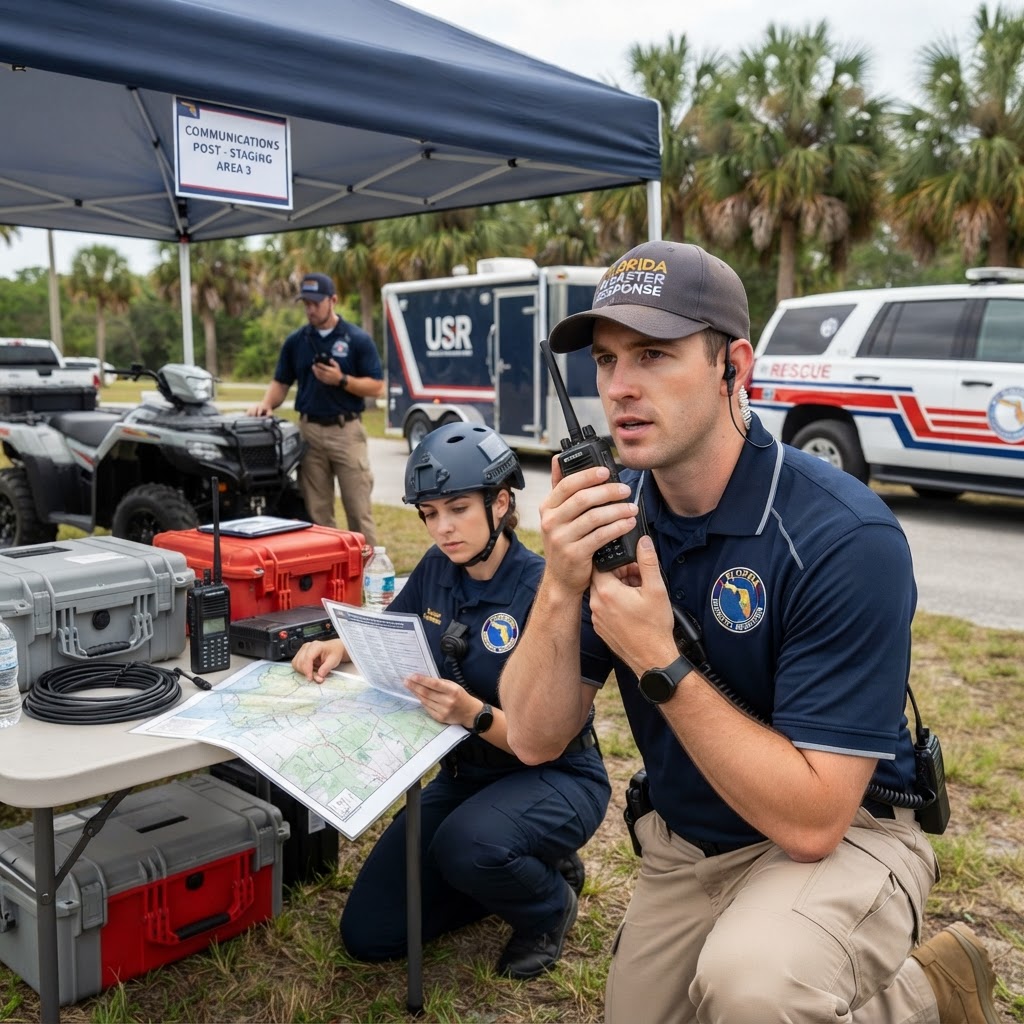
Effective radio communication is the lifeline of any successful emergency operation. Learn how disciplined radio usage ensures safety and mission success.
The Art of Clear Communication: Radio Discipline for Florida Responders
Effective radio communication is the lifeline of any successful emergency operation. When the power goes out or cell towers become saturated during a Florida weather event, clear and concise communication becomes the primary bridge between responders and coordination centers.
The Philosophy of Airtime Economy
In high-stress environments, the temptation to provide unnecessary detail is high. However, brevity is the cornerstone of effective radio discipline. Every second spent on an open channel is a second that another team member cannot use to request critical resources or report a safety hazard. Before keying the microphone, take a breath and organize your thoughts. Ensure that the message is necessary, accurate, and kept to the absolute minimum word count required to convey the information clearly.
Standardized Terminology and Plain Language
Emergency management has moved away from complex "ten-codes" in favor of plain language, which prevents confusion during multi-agency operations. Using standardized, professional language ensures that every responder—whether they are from a local fire department, a private EMS agency, or a volunteer organization like ERF—interprets the message identically. Avoid slang, jargon, or colloquialisms that might be misunderstood. When reporting your status or location, use clear, descriptive language that leaves no room for ambiguity.
The Importance of Listening
Radio discipline is just as much about listening as it is about talking. Before initiating any transmission, you must "listen before you talk." Interrupting an ongoing transmission or stepping over another responder is one of the most common causes of communication failure. Develop the habit of monitoring the channel's traffic rhythm. If the frequency is busy with tactical operations, wait for a natural lull before attempting to check in or update your status. If you do not hear the recipient respond, wait a designated interval before attempting to call again.
Managing Stress and Clarity
Adrenaline often leads to an increase in the speed and pitch of one's voice, which can make transmissions difficult to decipher over static or background noise. A disciplined responder speaks at a steady pace, slightly slower than normal, to ensure that every word is articulated. If you are operating in a loud environment, such as near generators or heavy equipment, shield your microphone from the wind and maintain a consistent distance from the device. Keeping a calm, authoritative, and measured tone sets the standard for the entire team.
Practical Takeaways
- Think before you press the PTT button: Formulate your entire message in your head before you key the radio.
- Listen for at least five seconds before transmitting to ensure the channel is clear.
- Use the "Who you are calling, who you are" format to initiate contact clearly.
- Keep messages short and prioritize mission-critical information.
- If the message is long, break it into shorter segments and ask for confirmation of understanding.
Why This Matters to ERF
At Emergency Responders of Florida, our strength lies in our ability to integrate seamlessly with various agencies during disasters. When our volunteers master radio discipline, they demonstrate professionalism and operational readiness. Being able to communicate effectively under pressure ensures that we can provide the highest level of service to our communities while maintaining the safety of our teams.
Stand Ready With ERF
Florida EMTs and Paramedics can submit a Disaster Reserve interest form to be considered for activation during major emergencies, with no regular hourly requirement.
ERF is not a 911 service. In an emergency, call 911.