A well-maintained vehicle is your primary lifeline during a Florida evacuation. Learn how to prepare your car for the road before an emergency strikes.
Living in Florida means being prepared for the unpredictable nature of our climate, particularly when a local authority issues an evacuation order. When you and your family need to move quickly, your personal vehicle becomes more than just a mode of transport; it becomes your mobile sanctuary. Ensuring your vehicle is ready to handle long periods of idling in heavy traffic or navigating challenging road conditions is a foundational step in your disaster readiness plan. By taking proactive measures today, you reduce stress and ensure your family can navigate to safety with confidence.
Establishing a Maintenance Baseline
The foundation of vehicle readiness is regular, routine maintenance. During an evacuation, you may spend hours on the road in extreme heat, which puts immense strain on a car’s cooling system and engine. Before the start of each storm season, ensure your tires are properly inflated and have sufficient tread depth. Check your battery health, as high temperatures are notorious for shortening the lifespan of Florida car batteries. Ensure that your fluid levels—specifically oil, coolant, brake fluid, and windshield washer fluid—are topped off. A well-maintained vehicle is significantly less likely to break down when you need it most.
The Evacuation 'Go-Bag' for Your Car
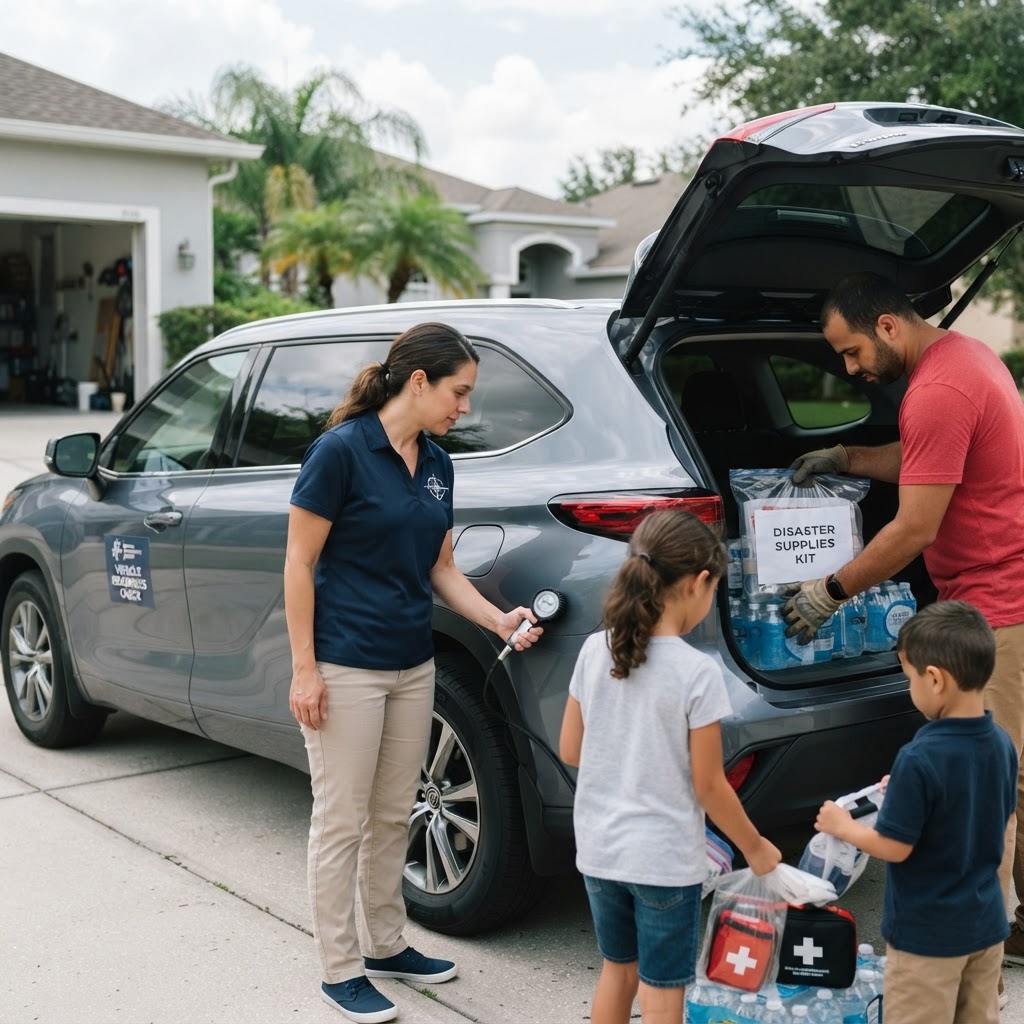
While your home emergency kit is essential, your vehicle should also contain a dedicated travel kit designed for long-duration transit. This should include jumper cables, a portable tire inflator, a basic first aid kit, and flashlights with extra batteries. Because evacuation routes can experience significant congestion, prioritize packing a 'traffic survival' kit: several gallons of potable water, non-perishable snacks, phone charging cables and portable power banks, and physical road maps in case cellular networks become overloaded. Never forget to keep a spare key in a safe, accessible location.
Fuel Strategy and Route Planning
In an emergency, gas stations along major evacuation routes may run out of fuel or lose power. Adopt a 'half-tank' rule during the peak of storm season; never let your fuel gauge drop below the halfway mark. This simple habit ensures that you are always ready to head out at a moment's notice. Furthermore, familiarize yourself with multiple evacuation routes. While GPS apps are helpful, they may suggest back roads that are prone to flooding or blocked by debris. Knowing your primary and secondary routes in advance allows you to make informed decisions without relying solely on technology that may fail during a crisis.
Practical Takeaways:
- Follow the 'Half-Tank' Rule: Keep your gas tank at least half full during hurricane season to avoid fuel shortages.
- Prioritize Fluid Checks: Ensure your cooling system is in top shape to prevent overheating during slow-moving traffic.
- Pack for Transit: Include water, snacks, portable chargers, and paper maps in your vehicle.
- Test Essential Gear: Verify that your jack, lug wrench, and spare tire are in working order and easily accessible.
- Practice Your Route: Know at least two ways out of your neighborhood that avoid low-lying, flood-prone areas.
Why This Matters to ERF
As a volunteer emergency response organization serving Florida since 2008, ERF understands that community resilience starts at home. When families are prepared and able to evacuate safely, it allows professional and volunteer responders to focus resources on those who are trapped or in critical need of help. Your readiness directly supports the efficiency of the entire emergency response system. Stand Ready With ERF: Florida EMTs and Paramedics can submit a Disaster Reserve interest form to be considered for activation during major emergencies, with no regular hourly requirement.
ERF is not a 911 service. In an emergency, call 911.