Develop a core understanding of Search and Rescue (SAR) principles to enhance your effectiveness as a volunteer emergency responder in Florida.
Professional readiness in the emergency services field extends beyond standard clinical care. As a Florida-licensed ALS EMS agency, Emergency Responders of Florida (ERF) emphasizes that being prepared for a disaster means understanding the complexities of the environments in which we work. Search and Rescue (SAR) operations represent a unique intersection of medical skill, tactical awareness, and physical endurance. Developing an awareness of these principles is essential for any EMT, Paramedic, or volunteer looking to support their community effectively during large-scale incidents.
The Philosophy of Systematic Search
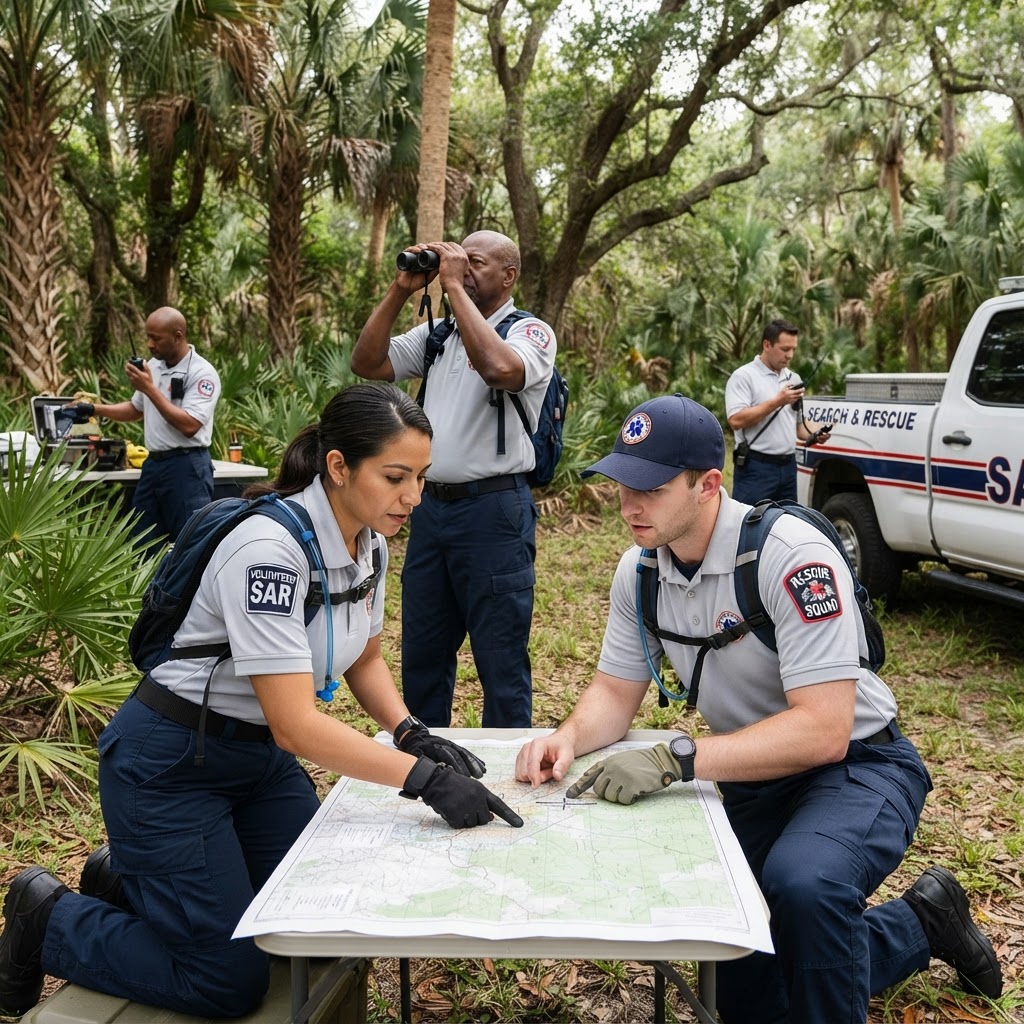
Search and Rescue is rarely the chaotic scene often portrayed in media. In reality, successful operations are defined by systematic, evidence-based approaches. Responders must understand the concept of 'probability of detection' and how search patterns are established. Whether working in the dense scrub of a Florida wetland or navigating an urban environment after a storm, the ability to maintain a methodical search path ensures that no area is overlooked and, more importantly, that responders remain safe while conducting their mission.
Terrain Management and Environmental Hazards
Florida presents unique challenges that differentiate our SAR environment from other regions. The combination of extreme humidity, high temperatures, and diverse terrain—ranging from swamplands and coastal mangroves to dense residential debris fields—requires a specific mindset. Awareness training focuses on recognizing terrain-specific hazards, such as unstable footing, wildlife interactions, and the physiological toll of heat stress. Understanding how to manage your own physical health in these environments is the first step toward becoming a capable asset in the field.
The Integration of Medical and Tactical Roles
In a disaster, the boundary between clinical EMS and SAR often blurs. A responder must be prepared to transition from patient assessment to technical rescue support seamlessly. This means maintaining proficiency in core medical skills while also learning to communicate effectively with other specialized units. Awareness of the 'triage-treat-transport' cycle within the context of a rescue operation is what separates an average responder from an exceptional one. When you understand the logistical flow of an incident, you can better anticipate the needs of the team, reducing task saturation and improving patient outcomes.
Practical Takeaways
-
Familiarize yourself with the basic phases of a search: planning, briefing, searching, and demobilization.
-
Prioritize physical conditioning specifically tailored to the endurance required for prolonged field operations in Florida’s climate.
-
Practice clear, concise radio communication protocols to ensure information flows correctly between search teams and command.
-
Always maintain situational awareness by identifying potential hazards before they become emergencies.
Why This Matters to ERF
At ERF, our mission relies on the readiness of our volunteers to respond to the needs of the state. By fostering a culture of continuous learning and SAR awareness, we ensure that our Disaster Reserve is equipped to support local authorities with confidence and precision. Whether it is providing medical standby or assisting in multi-agency search efforts, a broad understanding of rescue operations makes our volunteers more versatile and reliable in high-pressure situations.
Stand Ready With ERF
Florida EMTs and Paramedics can submit a Disaster Reserve interest form to be considered for activation during major emergencies, with no regular hourly requirement.
ERF is not a 911 service. In an emergency, call 911.