Accurate clinical documentation is the backbone of disaster response. Learn why maintaining high standards for patient care records is essential for Florida responders.
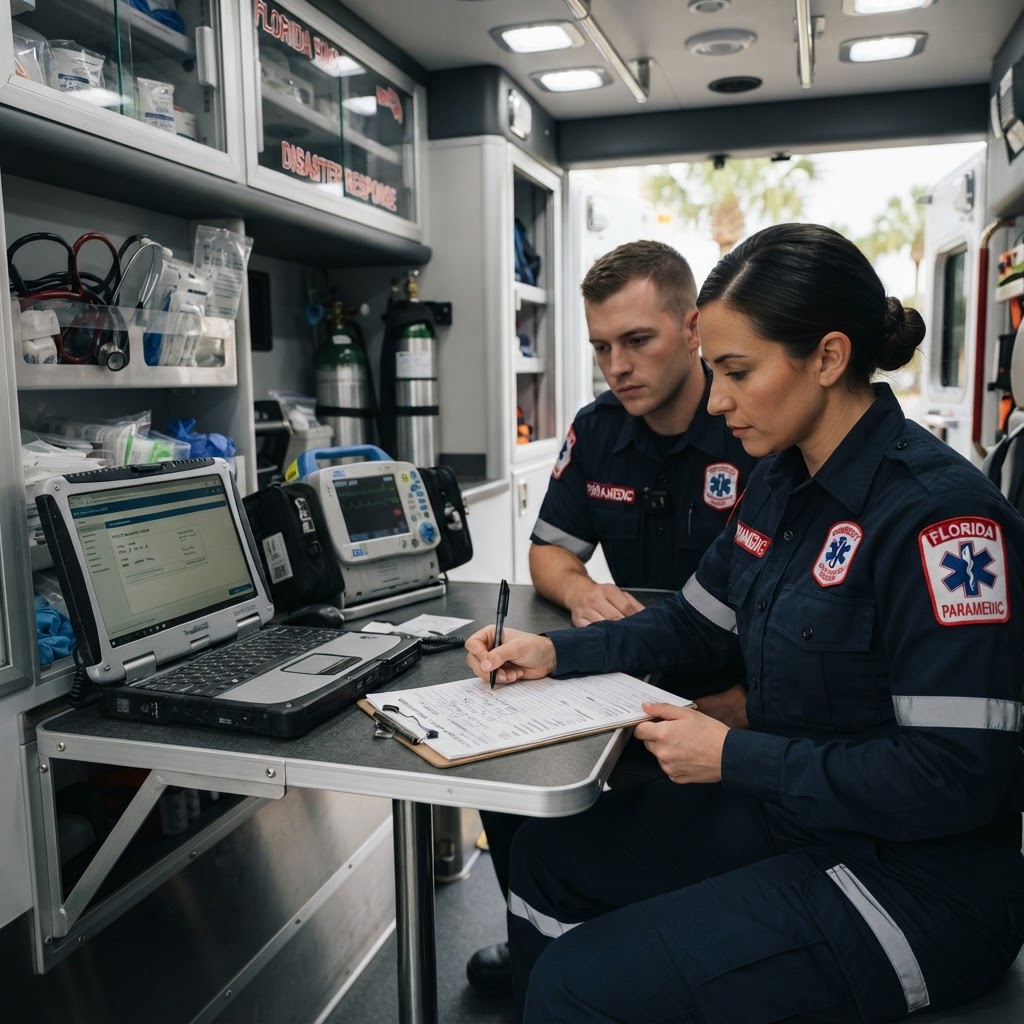
In the high-pressure environment of emergency medical services, the clinical chart is often viewed as a final administrative task. However, for responders in the field, documentation is much more than paperwork—it is a critical extension of patient care and a vital link in the chain of survival. As Florida responders, our ability to provide continuity of care during major disasters relies heavily on how effectively we communicate patient status and interventions to the next level of care providers.
The Clinical Impact of Precise Records
When a disaster strikes, systems can become overwhelmed, and information handoffs may occur in suboptimal conditions. A well-documented patient care record acts as a roadmap for the receiving facility or the next transport unit. By recording accurate vitals, clearly noting the timeline of interventions, and describing the patient's condition at the point of contact, you ensure that the clinical narrative remains intact even when the environment is chaotic. Consistency in documentation reduces the risk of errors and ensures that medical history and treatments are communicated without ambiguity.
Why Documentation Matters in Large-Scale Deployments
During widespread incidents, such as flooding or large-scale hurricane evacuations, multiple agencies often work in concert. A standardized, clear record is the language that allows different teams to understand what has already been done for the patient. Whether you are operating at an ERF-managed staging area or a community shelter, your documentation provides the evidentiary basis for continued medical support. It allows medical directors and public health officials to understand the scope of needs on the ground, which informs the strategic allocation of resources across the state.
Building Habits for Deployment Readiness
Readiness is not just about having the right gear in your go-bag; it is about maintaining a mindset of precision in your daily practice. Developing strong documentation habits during routine calls ensures that your skills remain sharp when the complexity of a disaster increases. Practice writing clear, objective, and timely reports that focus on the patient's condition and the rationale for your care. When you treat documentation as a professional standard rather than an afterthought, you improve your overall clinical acumen and better protect your patients and your professional integrity.
Practical Takeaways
- Focus on objective data: Prioritize measurable vitals and observable symptoms over subjective interpretations.
- Maintain chronological accuracy: Ensure that time-stamps are precise, especially when multiple interventions occur in rapid succession.
- Use standardized terminology: Stick to established EMS and clinical abbreviations to ensure clarity for all receiving healthcare providers.
- Practice in the mundane: Apply rigorous documentation standards to every patient contact so that it becomes second nature during high-stress deployments.
Why This Matters to ERF
As a licensed ALS EMS agency, Emergency Responders of Florida is committed to the highest standards of care. Our mission is to augment the existing emergency response infrastructure, and our reputation is built upon the professionalism of our volunteers. By ensuring our responders are proficient in documentation, we maintain the trust of our state and local partners and ensure that every patient we touch receives the seamless, high-quality care they deserve during Florida's most challenging times.
Stand Ready With ERF
Florida EMTs and Paramedics can submit a Disaster Reserve interest form to be considered for activation during major emergencies, with no regular hourly requirement.
ERF is not a 911 service. In an emergency, call 911.