Discover how the Disaster Reserve offers a flexible pathway for credentialed medical professionals to support Florida communities when the need arises.
In the landscape of Florida emergency management, the ability to rapidly scale resources is paramount. As a state that frequently faces complex environmental challenges, the need for a surge-capable workforce is a reality that emergency planners must address year-round. Emergency Responders of Florida (ERF) operates with the understanding that the most effective response is one that is professional, coordinated, and ready to mobilize on short notice.
The Concept of Surge Capacity
Surge capacity refers to the ability of an healthcare or EMS system to expand its operations to meet a sudden influx of demand that exceeds normal capacity. In Florida, this often occurs during hurricane season or other large-scale emergency events. Because it is neither practical nor sustainable for every agency to maintain a full-time staff large enough to handle extreme peak demand, the concept of a standby force becomes essential.
Why the Disaster Reserve Model Works
Unlike traditional employment models that require fixed shifts and constant presence, the Disaster Reserve is built on the foundation of availability. This model recognizes that many highly qualified EMTs and Paramedics have full-time commitments, whether in private practice, fire service, or private industry. By maintaining a roster of credentialed volunteers who are ready to serve when the call comes, ERF ensures that the state has a deep bench of skilled responders.
Bridging the Gap in Professional Readiness
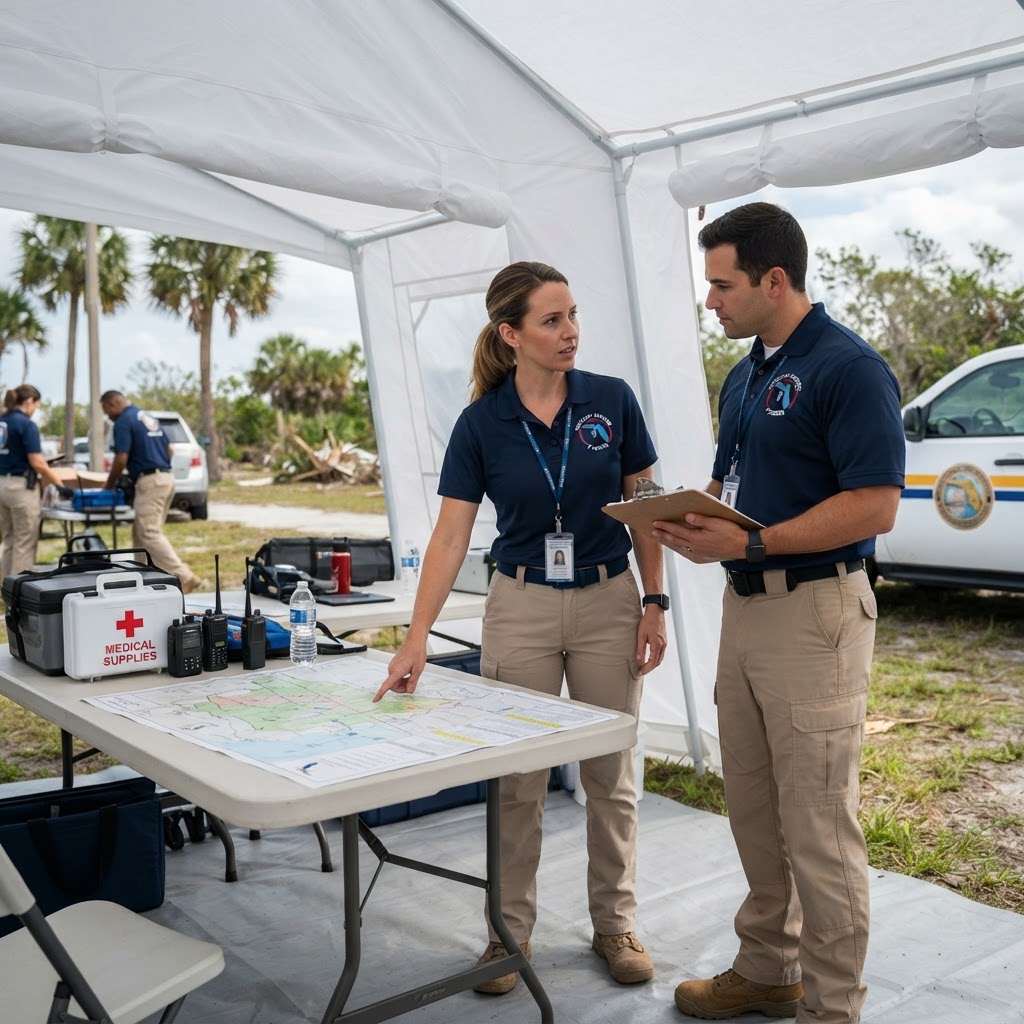
Professional readiness is not just about having a certification; it is about maintaining a state of preparedness. For those in the Disaster Reserve, this means staying current with training, ensuring credentials are in order, and being prepared to integrate into established command structures. This readiness allows ERF to provide seamless support to local jurisdictions, ensuring that when assets are deployed, they are immediately effective, highly disciplined, and fully integrated into the existing Incident Command System (ICS).
Enhancing Community Resilience
Community resilience is strengthened when the gap between local resources and the actual need is minimized. The Disaster Reserve acts as a strategic buffer. By providing supplemental support, ERF helps keep local 911 systems from becoming overwhelmed, allowing local responders to continue their critical work while the Reserve provides the necessary surge support to handle the scale of the incident. This collaborative approach is a hallmark of effective Florida emergency management.
Practical Takeaways
- Maintaining current state-issued EMS credentials is the first step toward effective disaster readiness.
- Engagement with the Disaster Reserve allows professionals to serve their state without compromising their primary careers.
- Preparedness involves keeping personal gear and family plans in order well before an incident occurs.
- Understanding the Incident Command System (ICS) helps volunteers integrate smoothly into emergency operations.
Why This Matters to ERF
Our mission is rooted in the belief that Florida is best served by a combination of career professionals and dedicated volunteers working in harmony. The Disaster Reserve is the primary vehicle through which we fulfill this mission, allowing us to maintain a flexible, professional, and ready force that can support our neighbors when they need us most. Supporting ERF growth means strengthening the entire state’s ability to respond to emergencies.
Stand Ready With ERF
Florida EMTs and Paramedics can submit a Disaster Reserve interest form to be considered for activation during major emergencies, with no regular hourly requirement.
ERF is not a 911 service. In an emergency, call 911.