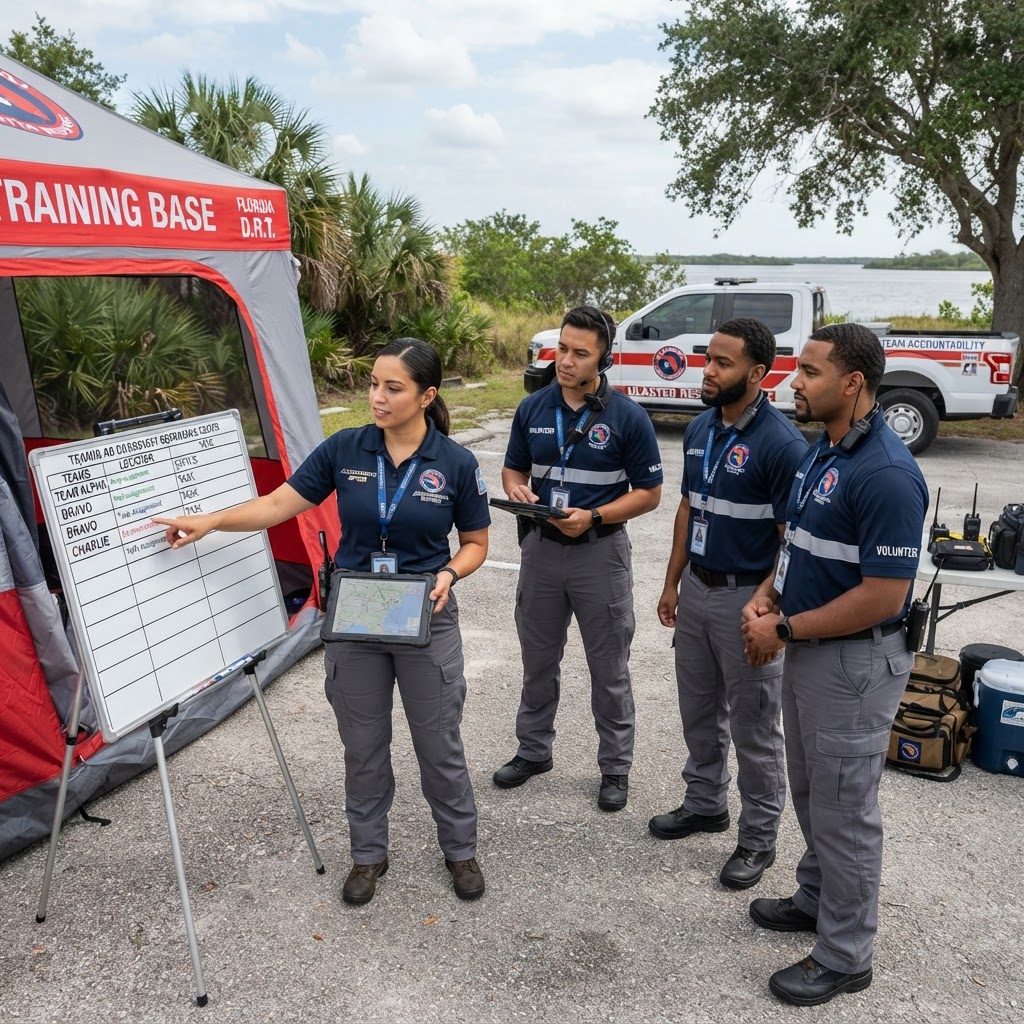
Effective emergency response relies on knowing who is on scene, where they are, and what they are doing. Learn why team accountability is a vital skill.
In the high-stakes environment of emergency response, chaos is the natural enemy of progress. Whether we are operating in the aftermath of a hurricane or supporting a search and rescue operation in the Florida backcountry, our ability to maintain order is directly tied to our team accountability protocols. Accountability is not just about keeping a roster; it is a fundamental pillar of safety that ensures every responder returns home at the end of their shift.
The Philosophy of Situational Awareness
Accountability begins with the individual but thrives as a collective habit. In a fast-paced deployment, environmental factors like extreme heat, flooding, or unstable terrain can easily cause team members to become separated. Maintaining situational awareness means knowing exactly where your partner is at all times. If you lose sight of your team, you have lost your primary safety net. Developing the mental discipline to verify team locations before moving to a new task is the cornerstone of professional emergency response.
Communication as the Primary Tool
Effective accountability is impossible without clear communication. Responders should always notify their team lead before changing positions or initiating a new task. Using standardized terminology reduces ambiguity during high-stress operations. If a team member needs to move to a staging area or assist another unit, that movement must be documented and communicated clearly. This prevents the confusion that arises when team leads are unable to account for their members, which can unfortunately lead to delayed response times or unsafe operational conditions.
Leveraging Technology and Manual Tracking
While digital tracking tools are becoming more common in modern EMS and rescue operations, the manual "pen and paper" backup remains a critical redundancy. Many of the most effective teams utilize a simple check-in/check-out system at the point of entry for any hazard zone. By pairing digital tools with manual accountability logs, responders can ensure that even in the event of a power outage or device failure, the location and status of every team member remain visible to leadership. Familiarity with both systems ensures that we remain operational regardless of the technological environment.
Practical Takeaways
-
Always maintain a 'buddy system' by checking in with your partner before every tactical move.
-
Practice consistent radio reporting to keep command informed of your location and status updates.
-
Utilize a physical accountability log or tally sheet as a reliable backup to digital systems.
-
Never leave a designated work zone without explicit authorization from your team lead.
Why This Matters to ERF
At Emergency Responders of Florida, our mission is built on reliability and professionalism. When we deploy to assist local agencies, our partners rely on our ability to manage our own team members safely and effectively. Maintaining strict accountability standards proves that we are a disciplined, competent force capable of integrating seamlessly into complex, multi-agency responses across Florida. Your commitment to these protocols directly impacts our reputation and the trust placed in us by the communities we serve.
Stand Ready With ERF
Florida EMTs and Paramedics can submit a Disaster Reserve interest form to be considered for activation during major emergencies, with no regular hourly requirement.
ERF is not a 911 service. In an emergency, call 911.